Basic Calculator For Android
3.7148.00Reviews
Analysis ByAppCompare
I spent time using Basic Calculator as a practical everyday tool rather than treating it like a full mathematics suite. It is a free productivity app from Digital Generation Hub, aimed at quick calculations and financial figures on Android. That focus makes it easy to understand: open it, enter numbers, check the result, and move on.
My overall impression is that it works best when I need a straightforward calculator without the extra layers found in spreadsheets, banking apps, or advanced scientific tools. Its average rating is 3.7 from around 8,000 ratings, and more than a million people have installed it. Those figures suggest a familiar, useful category with room for personal preference, not a universally perfect experience.
How Basic Calculator fits into everyday use
Readability and navigation at a glance
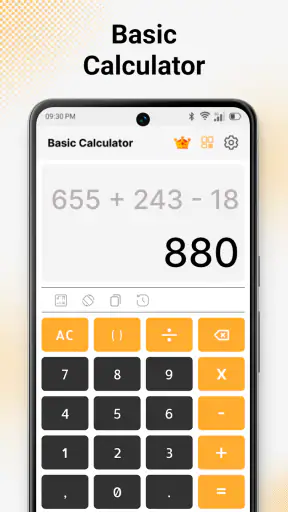
The app’s strongest quality is its direct purpose. A calculator should not make me search through menus before I can add, subtract, multiply, or divide, and this one is built around that expectation. The short description calls it “Basic Calculator,” and that is an accurate description of the experience: it is intended to get out of the way while I work.
I found this especially useful for small decisions that happen throughout the day. I can check the total cost of several items, work out a discount, estimate a monthly payment, or compare two prices without opening a more complicated financial application. The interface feels more approachable than a spreadsheet because I do not need to create a file, choose a cell, or remember a formula structure.
For someone who is not comfortable with technology, this simplicity can be reassuring. There are fewer concepts to learn, and the basic calculation flow is familiar from physical calculators. That also makes it suitable for a shared household device where different people may need to use it occasionally without setting up a personal account or learning a specialized workflow.
Still, a simple layout is only helpful when the displayed figures remain easy to distinguish. People with reduced vision, reading difficulties, or sensitivity to crowded interfaces should take a moment to test how comfortably they can read the result and identify the controls on their own phone. Screen size, display scaling, brightness, and system text settings can change the experience considerably.
I would not choose this app for long calculations that require a visible chain of reasoning. A basic calculator is good at producing an answer, but a notebook, spreadsheet, or dedicated mathematics application is better when I need to inspect every step later. That difference matters for students, people checking invoices, and anyone who must explain how a total was reached.
Financial calculations without turning into a finance platform
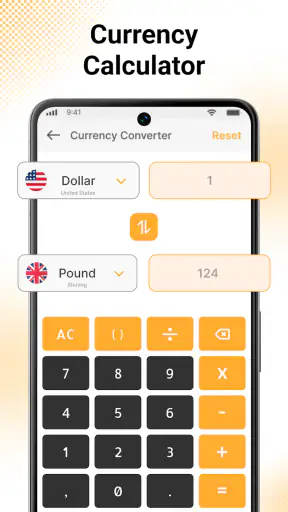
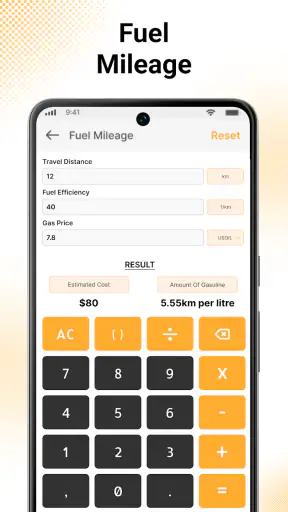
The financial angle is one of the more useful parts of the app’s purpose. I can imagine using it while comparing rent, utilities, shopping totals, travel costs, or a repayment estimate. The advantage is speed: I can perform the arithmetic separately from the app where the original financial information lives, without handing over account details or navigating a larger service.
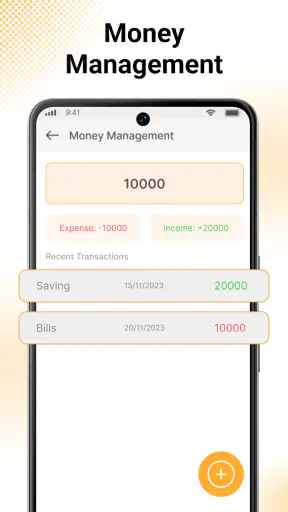
There is an important trade-off, however. A calculator can help with the arithmetic behind a budget, but it does not replace a budgeting system that remembers income, categories, dates, or transactions. If I need recurring records, charts, shared finances, or an audit trail, I would move to a spreadsheet or finance app instead. Basic Calculator is better as a quick calculation layer than as a complete money-management workspace.
A useful habit is to break a complicated estimate into labelled notes outside the app. For example, when checking the cost of a trip, I might calculate transport, accommodation, and food separately, write each result down, and then combine them. This reduces the risk of losing track of what a final number represents. It is a small workflow improvement, but it makes a simple calculator much more dependable for real decisions.
I would also double-check decimal placement before relying on a result. This is not a criticism unique to this application; it is a normal calculator risk that becomes more serious when dealing with prices, tax, percentages, or currency conversions. For important financial choices, I prefer to repeat the calculation or verify it in a second tool.
Motor and sensory considerations
Basic Calculator can be a comfortable option for people who prefer a limited number of actions, because the task is usually a sequence of taps rather than navigation through several screens. That can help users who find complex productivity software tiring or confusing. The app’s free availability also makes it easy to try without committing money first.
At the same time, calculator buttons require accurate touch input. Users with tremors, limited dexterity, hand fatigue, or difficulty making small taps may find repeated number entry frustrating, particularly when working quickly. A larger phone or system-level touch adjustments may help, but I would not assume that the app itself solves every motor-access challenge.
Voice interaction can be useful in situations where tapping is inconvenient, such as when my hands are occupied while cooking or when I am carrying shopping. I would treat voice input as a device-level convenience rather than an app-specific promise, and I would verify the displayed result afterward. Spoken numbers can be misunderstood, especially with decimals, similar-sounding digits, background noise, or different accents.
People who rely on screen readers should test the app directly with their preferred Android accessibility tools. Calculator controls need clear identification and a sensible reading order to be comfortable with non-visual use. I would not claim that every control is optimized for a particular assistive technology without checking it on the user’s own device, because Android versions, manufacturers, and accessibility settings can produce different results.
For users with color-vision differences, the safest approach is to confirm that the important distinction between numbers, operators, and the displayed answer does not depend only on color. If the interface remains understandable through labels and position, that is a strength. If a user must rely heavily on subtle visual contrast, the experience may be less comfortable depending on the phone’s display and theme settings.
Situational access in real life
One realistic use case is grocery shopping. I might compare the price of several package sizes, add items as I move through the store, and estimate the final amount before reaching the checkout. In that situation, the app’s value is not advanced mathematics. It is the ability to perform a quick calculation without opening a full spreadsheet or searching through a finance service.
Another situation is splitting a household expense. If three people share a purchase, I can calculate the total and divide it before sending a message. For uneven contributions, I can perform separate calculations and write the results down. This is convenient, but I would still keep the names and payment details in the messaging or finance tool rather than expecting the calculator to manage the arrangement.
The app may also suit a learner practicing everyday arithmetic. A parent, tutor, or student can use it to check an answer after working on paper. That order matters: using the calculator after attempting the problem encourages checking rather than replacing the learning process. For advanced algebra, graphing, symbolic manipulation, or detailed scientific work, I would choose a specialist tool because a basic calculator is not designed to show that depth.
Its Everyone content rating makes it appropriate to consider for a broad household audience. I still think supervision and teaching matter for younger users, especially when the calculations involve money. The app can provide an answer, but it cannot explain whether the numbers entered were sensible or whether an adult’s financial assumption was correct.
Situational access also includes attention and environment. A simple calculator is useful when I am tired, distracted, or in a hurry because there is less setup than in a spreadsheet. But those are exactly the moments when input mistakes are more likely. My practical rule is to pause before pressing the final operation, read the expression from left to right, and check the result against a rough mental estimate.
Where the simplicity starts to become a barrier
The same minimal approach that helps beginners can limit experienced users. If I need saved calculations, reusable templates, a history of decisions, or an exportable record, I would rather use a spreadsheet or a finance application. Those tools take longer to open and learn, but they provide context that a quick calculator cannot.
There is also a difference between calculating a financial figure and understanding a financial figure. A calculator can multiply a price by a quantity or estimate a percentage, but it does not explain fees, interest conditions, tax rules, exchange-rate changes, or contractual details. I would never use a calculator result as the only basis for a major financial commitment.
People who need advanced scientific functions should also look elsewhere. The app is presented as simple, so I would not expect it to replace a scientific calculator, graphing tool, or classroom mathematics platform. Choosing it for those tasks would create unnecessary friction and could make it harder to verify the work.
Accessibility has a similar boundary. The app may be easier than a dense productivity suite because it has a narrow purpose, but simplicity does not automatically guarantee excellent support for every ability. A user who needs unusually large controls, strong customization, spoken feedback, or a persistent calculation history should test the app in their own setup and compare it with alternatives designed around those needs.
One practical limitation is that a result without context can be easy to misread later. If I calculate several figures in succession, I may remember the number but forget which scenario produced it. I avoid that problem by writing a short label beside each important result, such as “weekly groceries” or “three-person split.” This turns a quick calculation into something I can safely revisit.
Version, cost, and choosing the right role
Basic Calculator is free to install, with optional in-app purchases ranging from forty-nine cents to $10.99 per item. That makes trying it low-risk, although I would check any purchase screen carefully before confirming a transaction. The current version is 1.4.8, and it runs on Android 7.0 or later, so compatibility should cover many older phones as well as newer devices.
The app was released on March 12, 2024, by Digital Generation Hub. I see it as a focused utility rather than a platform I would build my whole productivity routine around. Its role is clear: open it when I need arithmetic, use the result, and return to the task that brought me there.
Compared with the calculator already included on many phones, the reason to choose this app would be personal preference and how its interface fits a particular device. Compared with spreadsheets, it is quicker for one-off arithmetic but much weaker for records and analysis. Compared with finance apps, it avoids the weight of account management but cannot track real financial activity. Compared with scientific calculators, it is more approachable but less suitable for technical study.
That comparison helped me define the right audience. I would recommend it to someone who wants a dedicated, uncomplicated calculator for shopping, household arithmetic, quick estimates, and basic financial calculations. I would skip it for professional accounting, detailed budgeting, advanced mathematics, or any workflow where every calculation must be saved and explained.
An inclusive verdict for everyday calculations
After using Basic Calculator, I see its value in restraint. It does not ask me to organize a project when I only need to total a few figures. For many people, that narrow purpose can make the app less intimidating and easier to fit into daily routines. Its free price, broad age rating, and support for Android 7.0 or later also make it approachable for a wide range of users.
My recommendation comes with a clear condition: treat it as a calculation tool, not as a complete accessibility solution, finance manager, or mathematics tutor. Test the text, controls, screen-reader behavior, and touch accuracy on the phone you actually use. If those basics feel comfortable, the app can be a handy companion for quick decisions.
The most inclusive way to use it is to combine it with habits that reduce mistakes: enter one task at a time, keep a short label for important results, repeat high-stakes calculations, and choose a spreadsheet or specialist tool when context matters more than speed. With those boundaries in mind, Basic Calculator is a sensible choice for straightforward arithmetic and a poor substitute for software that needs to explain, store, or manage more than a number.
FAQ
What is Basic Calculator for Android used for?
Basic Calculator for Android is designed for everyday calculations such as addition, subtraction, multiplication, and division. It can be useful for checking prices, splitting bills, calculating discounts, managing a simple budget, or completing school and work tasks. Its straightforward layout makes it suitable for users who want essential calculator functions without advanced scientific or financial tools.
Does Basic Calculator for Android work without an internet connection?
Yes, a basic calculator normally performs its calculations directly on the device, so an internet connection is not required for its core features. You can use it while traveling, in areas with poor reception, or when mobile data is disabled. However, availability of updates, advertisements, privacy information, or additional app-related services may depend on internet access.
Is Basic Calculator for Android free to download and use?
Basic Calculator for Android is generally available as a free download, allowing users to access its main calculation functions without paying upfront. Depending on the version and publisher, the app may include advertisements, optional purchases, or different licensing conditions. Before installing, check the Google Play listing for current pricing, in-app purchase details, and supported Android versions.
Does the app include advanced or scientific calculator functions?
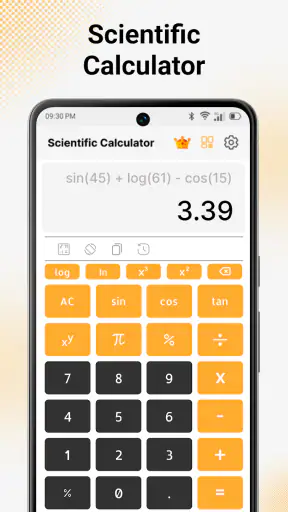
The app is primarily intended for simple arithmetic rather than advanced mathematical work. Users should expect common operations such as addition, subtraction, multiplication, division, percentage calculations, and possibly decimal input. Features like trigonometric functions, logarithms, powers, equations, unit conversion, or graphing may not be included, so students and professionals may need a scientific calculator app instead.
Is Basic Calculator for Android safe and easy to use?
A basic calculator should be easy to operate because it usually presents large, clearly labeled buttons and a simple display with minimal menus. Before downloading, review the developer name, ratings, recent user feedback, requested permissions, and privacy policy on Google Play. A calculator generally should not need access to contacts, messages, or location, so unusual permissions deserve careful consideration.
Pros
- Clear
- uncluttered layout makes everyday calculations easy.
- Starts quickly and uses very little storage space.
- Large buttons are comfortable to tap on smaller screens.
- Works offline without requiring an account or internet access.
- Useful for basic arithmetic
- percentages
- and quick calculations.
Cons
- Lacks advanced scientific and financial calculation functions.
- No built-in history makes it harder to review previous results.
- May feel too limited for students or technical users.
- Ads may appear depending on the app version.
- No synchronization across devices or calculator customization options.